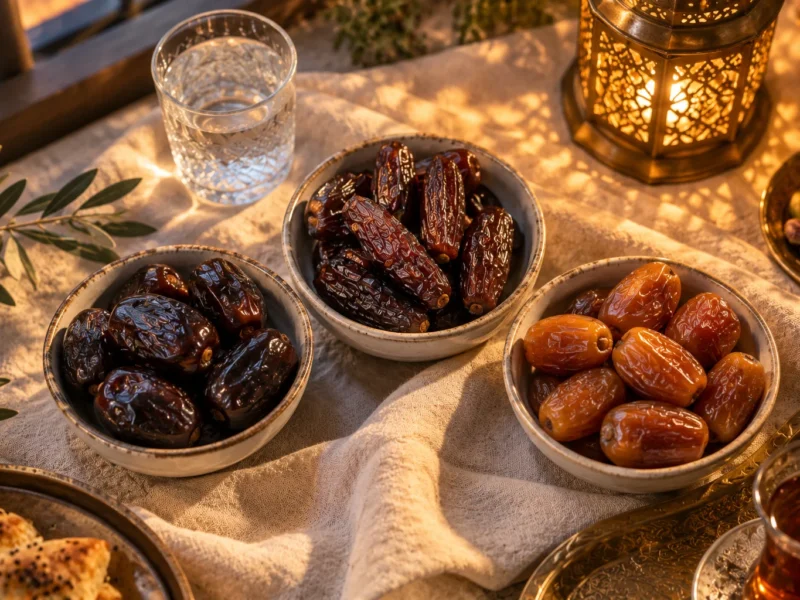

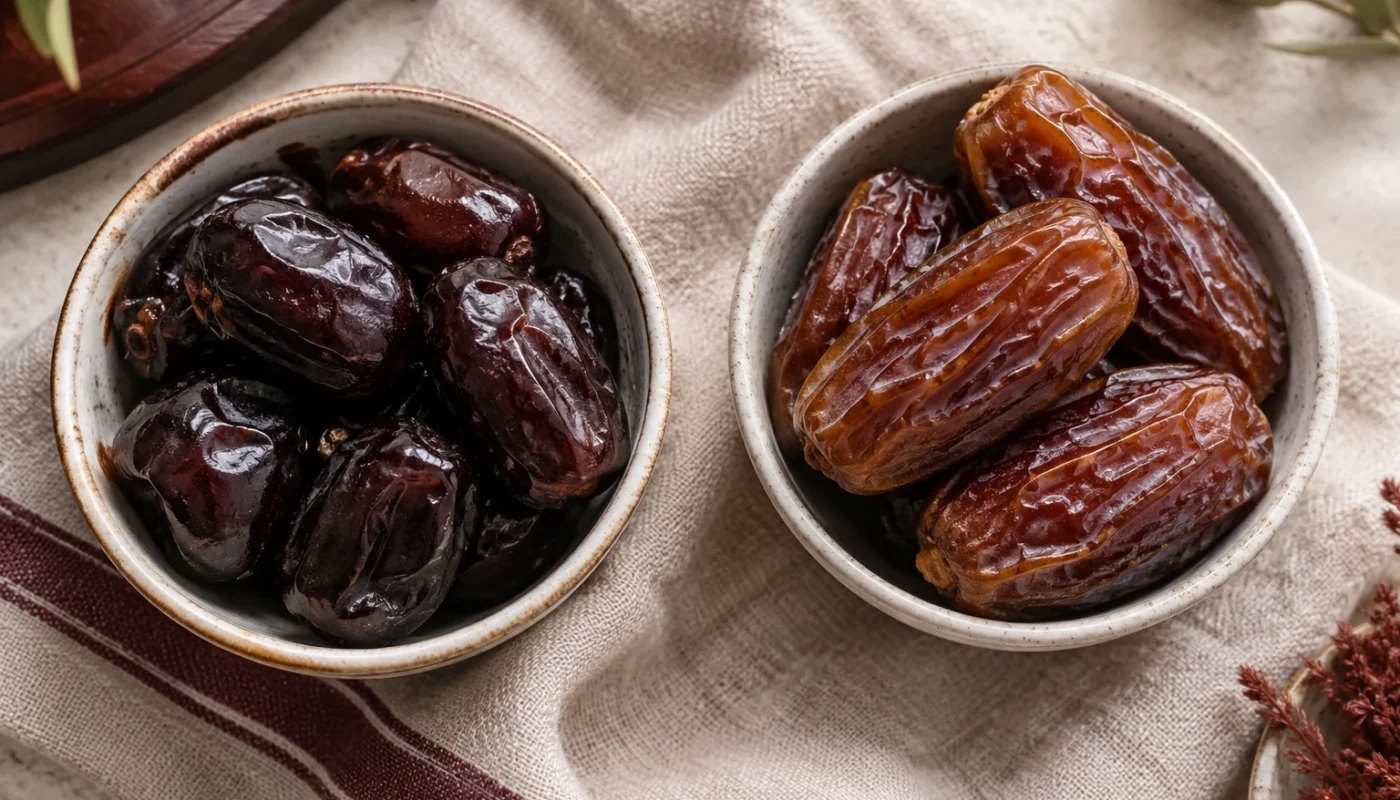
Mazafati vs Medjool — the short answer: Mazafati is a soft, moist, dark date with a deep caramel-cocoa flavour and a lower price; Medjool is a large, chewy, amber-brown date with a honey-like sweetness and a higher price. If you eat dates fresh, at iftar or blended into desserts, Mazafati usually wins. If you want a big, firm date to stuff or serve on a board, Medjool is the classic choice. Below we compare the two on every point that matters — botany, texture, sugar, nutrition, price, storage and use — so you can decide with confidence.
Where do Mazafati and Medjool dates come from?
Both belong to the same species, the date palm Phoenix dactylifera, but they are different cultivars with very different growing histories.
Mazafati (also written Mozafati, and often sold as “Bam dates”) is native to Kerman province in south-eastern Iran. The city of Bam, with its hot days, cool nights and low humidity, produces the variety’s best-known fruit. Mazafati is harvested at the rutab stage — fully ripe but still high in moisture — which is why it is treated as a fresh fruit and kept chilled.
Medjool originated in Morocco’s Tafilalet oasis region. In the 1920s a small number of offshoots were exported to the United States to escape a palm disease, and from that stock the variety spread to California, Arizona, Israel, Jordan and later Saudi Arabia. Medjool is harvested at the drier tamar stage, so it is shelf-stable at room temperature.
At MaxiFlavour we source Mazafati directly from growers in Bam. You can see the full range on our dates category page.
How do they differ in size and appearance?
- Mazafati: medium size, roughly 2.5–4.5 cm; skin dark brown to almost black, glossy, thin and clinging to the flesh.
- Medjool: large, roughly 4–7 cm; skin amber to reddish-brown, slightly wrinkled and often loose from the flesh.
Medjool’s size is its selling point — a single fruit can weigh 20–25 g, roughly double a typical Mazafati. That matters for portion control (see the nutrition section) and for stuffing.
Taste and texture: which one is softer?
This is where the two are most different, and it comes down to water content.
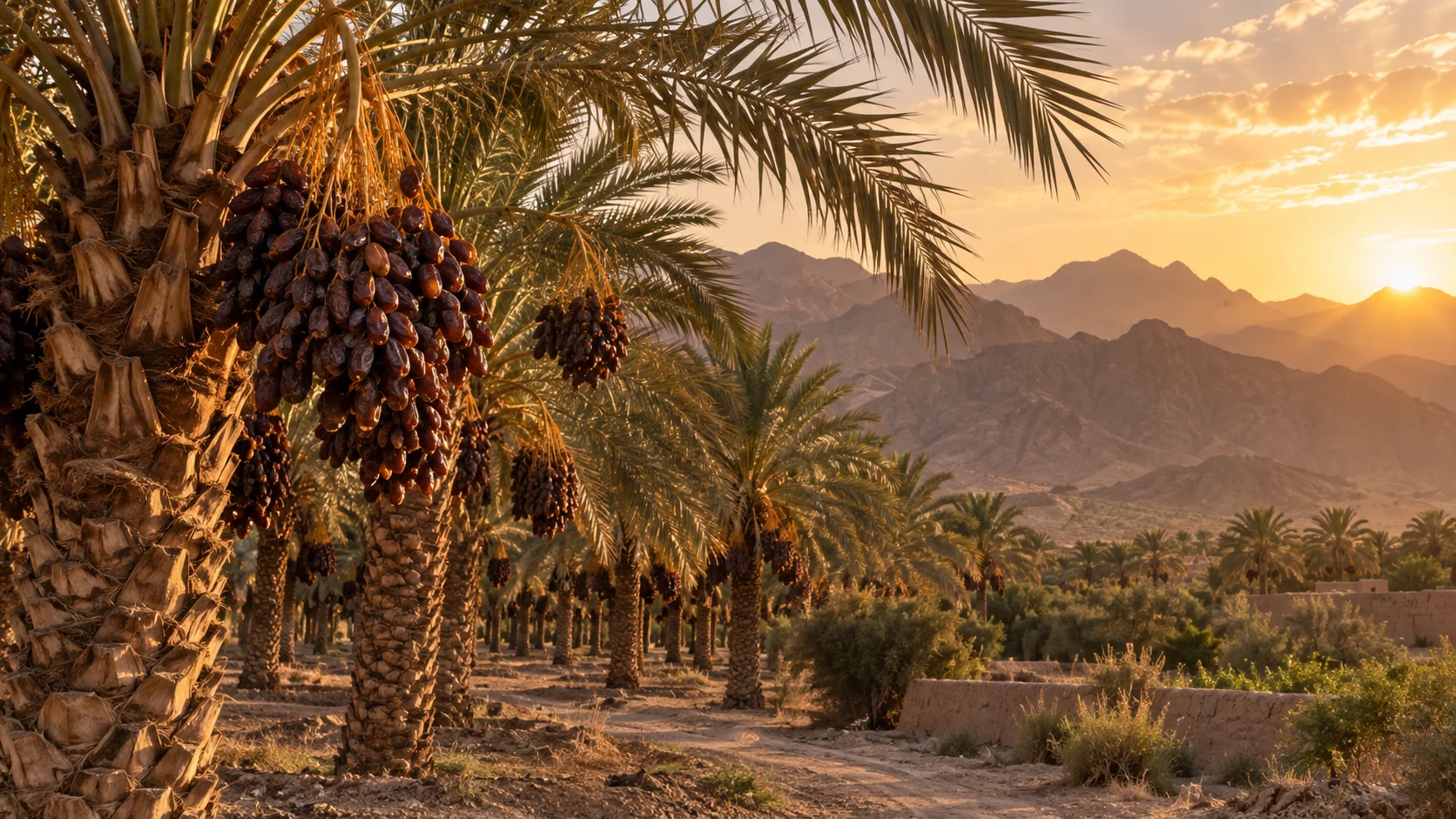
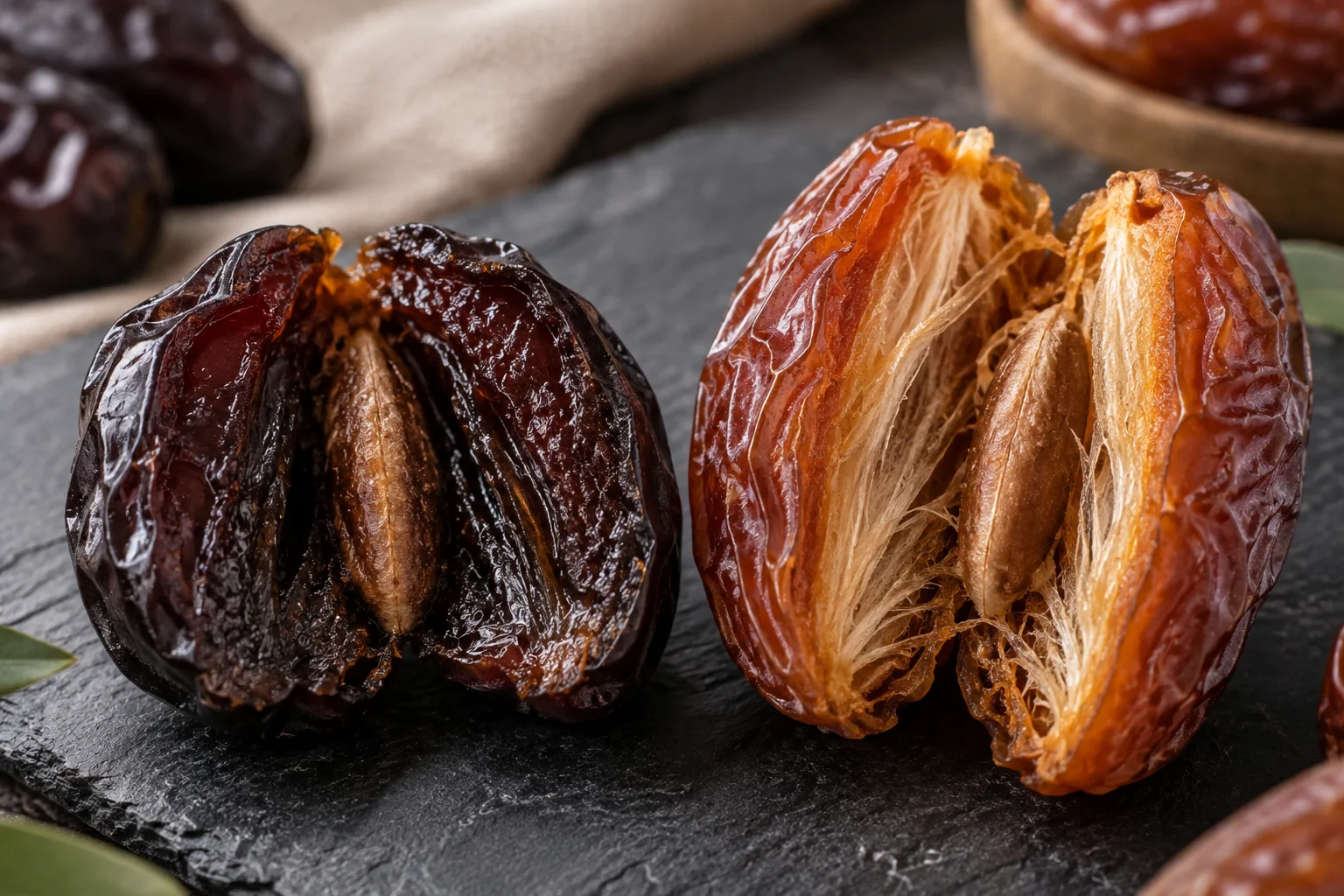
Mazafati contains around 15–25 % moisture at sale. The flesh is soft, almost creamy, and melts rather than chews. Flavour notes lean towards dark caramel and cocoa, with a slight brightness at the end. It is the date many people describe as “chocolatey”.
Medjool is drier, typically 20 % moisture or less after curing, with a dense, chewy, fibrous bite. The taste is rounder and more honey-like, with less acidity. Because it is firmer, it holds together when sliced or stuffed.
If you have only eaten supermarket Medjool, a fresh Mazafati can be surprising: it is closer to a ripe fruit than to a dried one.
Sugar, calories and nutrition per 100 g
Dates are energy-dense in every variety, but the numbers shift with moisture. Drier fruit means more sugar per gram; wetter fruit dilutes it. Typical values per 100 g:
| Per 100 g | Mazafati (fresh, rutab) | Medjool (cured, tamar) |
|---|---|---|
| Energy | ≈ 270 kcal | ≈ 277 kcal |
| Carbohydrates | ≈ 68 g | ≈ 75 g |
| of which sugars | ≈ 62 g | ≈ 66 g |
| Fibre | ≈ 6.5 g | ≈ 6.7 g |
| Protein | ≈ 1.9 g | ≈ 1.8 g |
| Fat | ≈ 0.3 g | ≈ 0.2 g |
| Potassium | ≈ 650 mg | ≈ 696 mg |
| Magnesium | ≈ 45 mg | ≈ 54 mg |
Medjool figures follow USDA FoodData Central reference values; Mazafati figures are typical ranges reported in Iranian food-composition studies. Values vary by harvest and moisture — the nutrition tab on each MaxiFlavour product shows the figures for that batch.
Two practical takeaways:
- Per fruit, Medjool carries about twice the sugar of Mazafati simply because it is twice the size (one Medjool ≈ 66 kcal, one Mazafati ≈ 30–35 kcal).
- Sugar type is similar: both are dominated by glucose and fructose, with very little sucrose. That, together with the fibre, is why dates have a moderate glycaemic index (published values mostly fall between 42 and 55 depending on variety and ripeness) rather than the high GI of refined sugar.
Neither is a “low-sugar” food. Both are a whole-fruit source of sugar with fibre, potassium and polyphenols — a better choice than syrup or sweets, not a free one.
Price: why is Medjool more expensive?
Medjool is one of the costliest dates on the market for three reasons: the palms need hand-thinning and bagging of fruit clusters, yields per tree are lower than for most varieties, and much of the supply comes from high-wage growing regions. Mazafati is grown at scale in Iran, harvested with less intervention and sold closer to the farm-gate price. In Europe you will typically pay two to three times more per kilo for Medjool than for good Mazafati.
For everyday eating, that difference adds up fast. For a gift box or a special table, Medjool’s size may justify it.
Storage: fresh versus shelf-stable
- Mazafati is a fresh date. Keep it refrigerated in a sealed container; it stays at its best for several months and freezes well for up to a year. Left warm, it can ferment or dry out.
- Medjool is cured and shelf-stable. An airtight container in a cool cupboard keeps it for months; the fridge extends that to a year or more. Sugar crystals on the skin are natural and harmless.
If you do not have fridge space or you are shipping dates as a gift, Medjool is more forgiving. If you can keep them cold, Mazafati rewards you with a texture Medjool cannot match.
Which date is better for Ramadan and iftar?
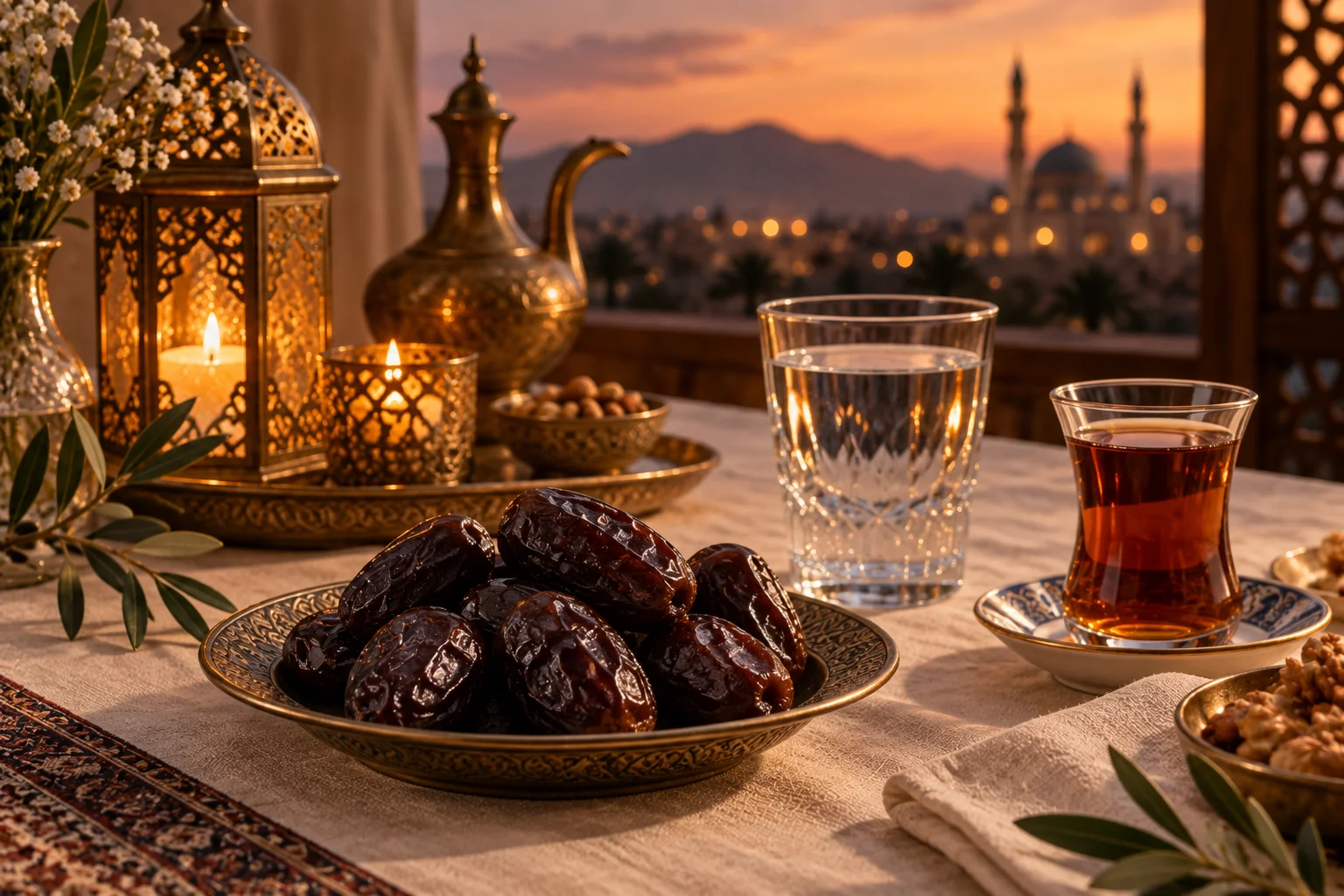
Breaking the fast with dates is a tradition across the Muslim world, and both varieties are used. Mazafati is the traditional iftar date in Iran and much of the Gulf, valued for its softness after a day without water and its quick, gentle sugar. Medjool is popular in North America and Europe largely because it is what shops stock. On taste and tradition, Mazafati has the edge; on convenience, Medjool does.
Which is better for baking and cooking?
- Date paste, syrup, smoothies, energy balls: Mazafati. It blends smooth without soaking.
- Stuffed dates, cheese boards, bacon-wrapped dates: Medjool. Its size and firm flesh hold a filling.
- Sticky toffee pudding and cakes: either; Mazafati gives a darker, more caramelised result.
- Chopping into salads or granola: Medjool, or a firmer Iranian variety such as Piarom or Sayer.
Mazafati vs Medjool at a glance
| Mazafati | Medjool | |
|---|---|---|
| Origin | Bam, Kerman — Iran | Morocco; now mainly USA, Israel, Jordan |
| Size | Medium | Large |
| Texture | Soft, moist, creamy | Firm, chewy, dense |
| Flavour | Dark caramel, cocoa | Honey, mild caramel |
| Storage | Refrigerate (fresh) | Room temperature (cured) |
| Sugar per fruit | Lower (smaller fruit) | Higher (larger fruit) |
| Price | Lower | Higher |
| Best for | Fresh eating, iftar, blending | Stuffing, boards, gifting |
So, which should you buy?
Choose Mazafati if you want the softest, most flavourful date at a fair price and you can keep it in the fridge. Choose Medjool if you need a large, firm, shelf-stable date for stuffing or gifting and price is secondary. Many households keep both: Mazafati for everyday and iftar, Medjool for guests.
Whichever you pick, buy from a source that tells you the variety, origin and harvest — not just “dates”. Every product in our dates collection lists its origin, texture and nutrition, and comes directly from the growers we work with. You can start with our fresh Mazafati dates from Bam, or read more about how we source on the About MaxiFlavour page.
Curious about the rest of the Persian pantry? Our guide to pistachio health benefits is a good next read.

Written by
mohamad snaashari
Part of the MaxiFlavour team, sharing recipes, origin stories and good food moments from across Europe.