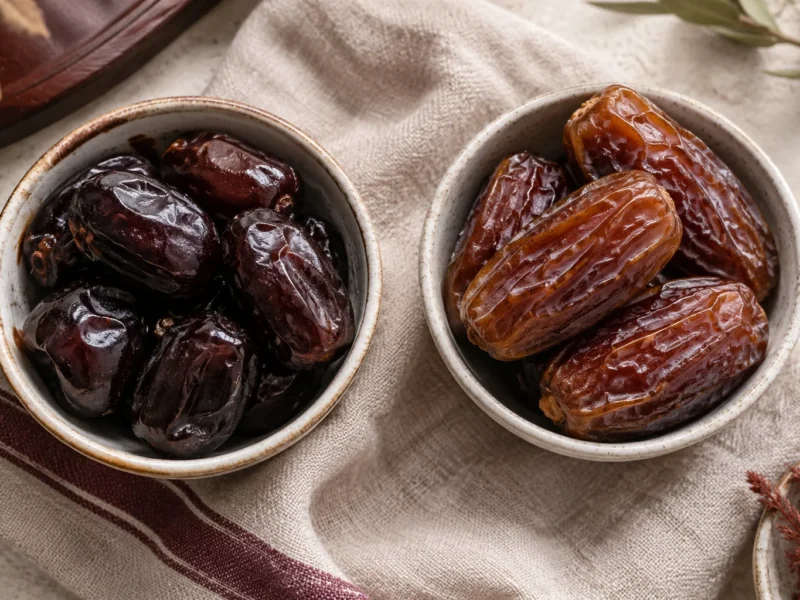

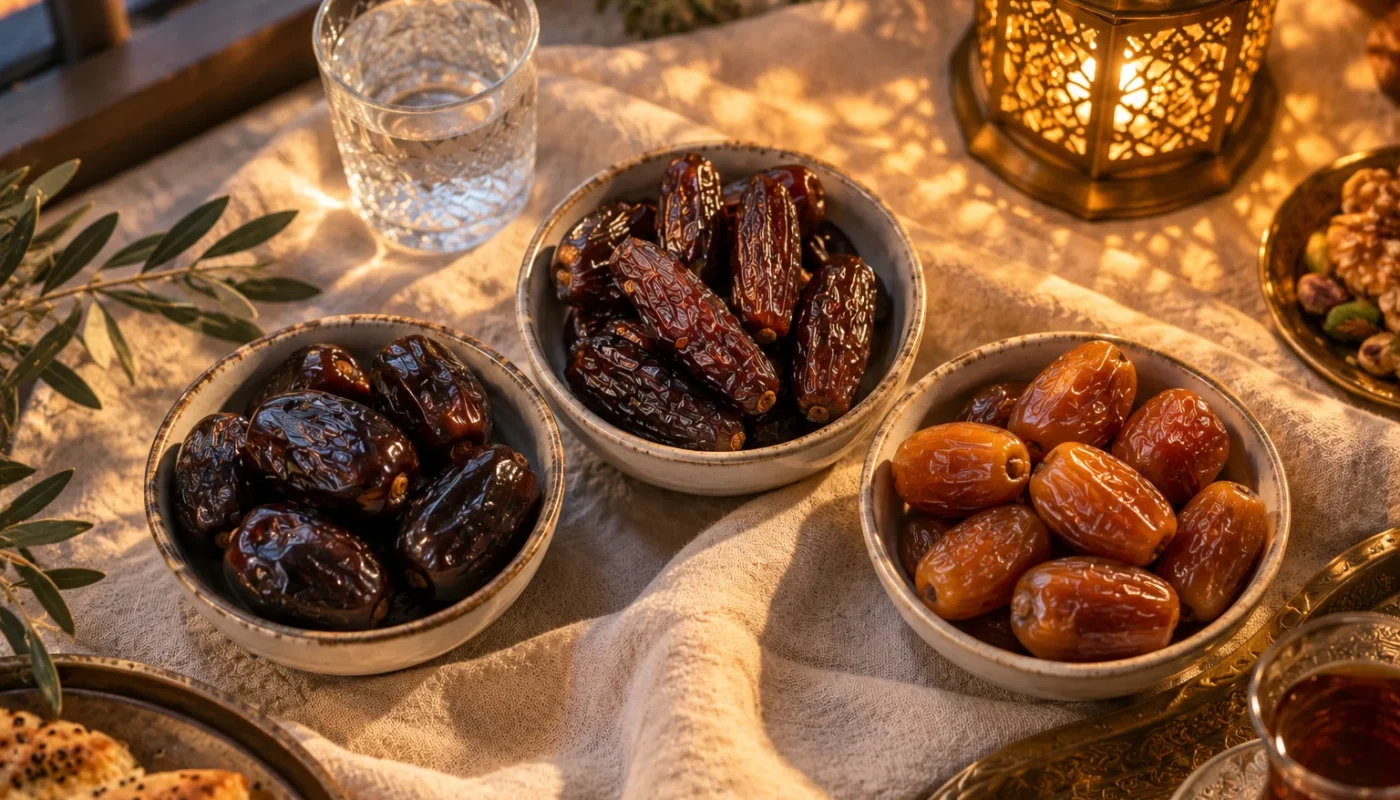
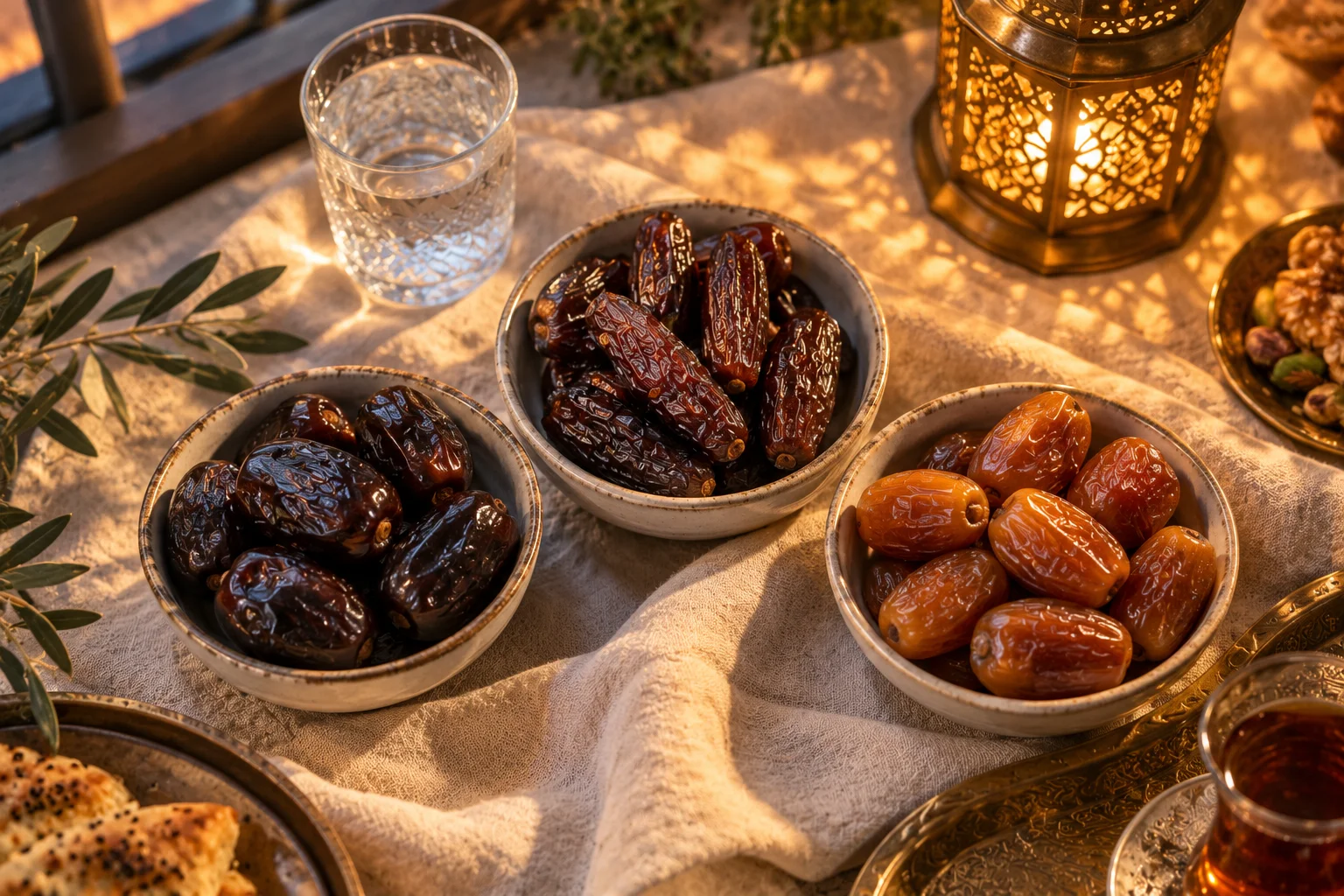
The best dates for Ramadan depend on when you eat them. For breaking the fast at iftar, a soft, juicy date such as Mazafati is easiest to enjoy after a long day without water. For suhoor and for carrying through the day, a semi-dry date such as Piarom or Sayer keeps better and is less sticky. This guide looks at five Iranian varieties. For each one we cover texture, sweetness, storage and the moment of the day it suits best, and we finish with how much to buy for a full month.
Why are dates eaten at iftar?
Breaking the fast with dates is one of the oldest customs of Ramadan. The tradition follows the practice of the Prophet Muhammad, who is reported to have broken his fast with fresh dates, then dried dates, then water. Beyond the tradition there is a practical reason. After many hours without food or drink, a small, soft piece of fruit is gentle on the stomach. It gives natural sugars quickly and prepares you for the meal that follows.
Dates are also a source of potassium, which contributes to normal muscle function, and they are rich in fibre. Values vary by variety and moisture. Reference figures for dates are published in USDA FoodData Central, and every date on our site lists its own nutrition per 100 g.
Which date is best for iftar?
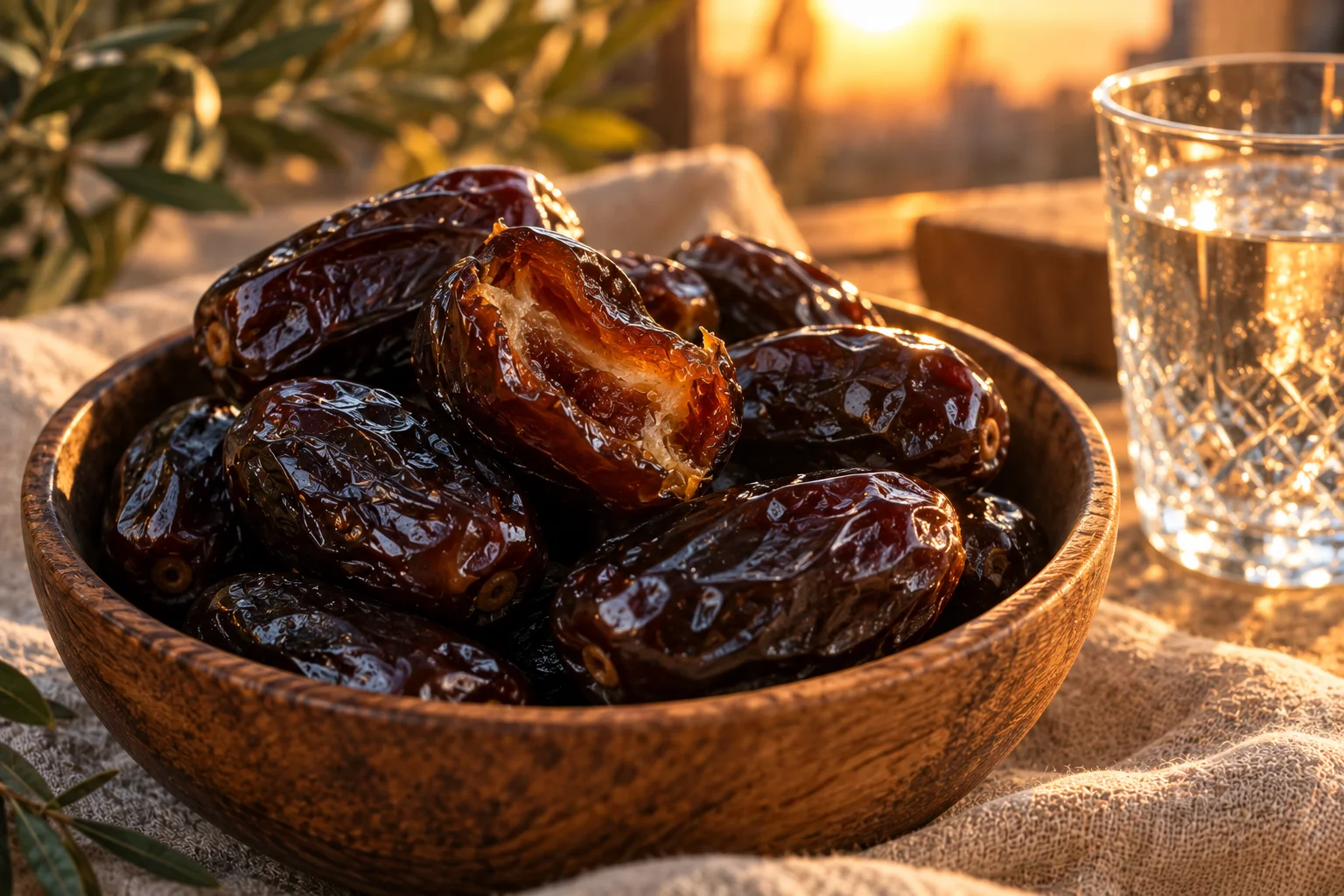
Mazafati is the classic answer. It comes from the date groves around Bam in Kerman province and is picked at the fresh rutab stage. The fruit is dark, glossy and very soft, with a flavour of caramel and cocoa. After a day of fasting it needs almost no chewing, which is exactly what you want in the first minutes of iftar.
Because Mazafati is a fresh date, it lives in the fridge. Take the portion for iftar out about twenty minutes before sunset so it softens back to room temperature. Cold dates taste noticeably less sweet.
If you want to compare it with the date most European supermarkets sell, read our guide to Mazafati vs Medjool dates.
Which date is best for suhoor?
Suhoor is eaten before dawn, often in a hurry. It helps to have dates that sit on the table without going sticky, and that pair well with yoghurt, oats or bread.
- Piarom: long, dark and semi-dry, with a toffee-like flavour. Less sugary on the tongue than soft dates and pleasantly chewy. It keeps well at room temperature.
- Sayer: amber and semi-dry, with a rich caramel sweetness. It is dense enough to chop into porridge or eat with a handful of nuts.
- Zahedi: the firmest and least sweet of the five. It is a good choice for anyone who finds other dates too rich early in the morning.
Which dates are best to give as a Ramadan gift?
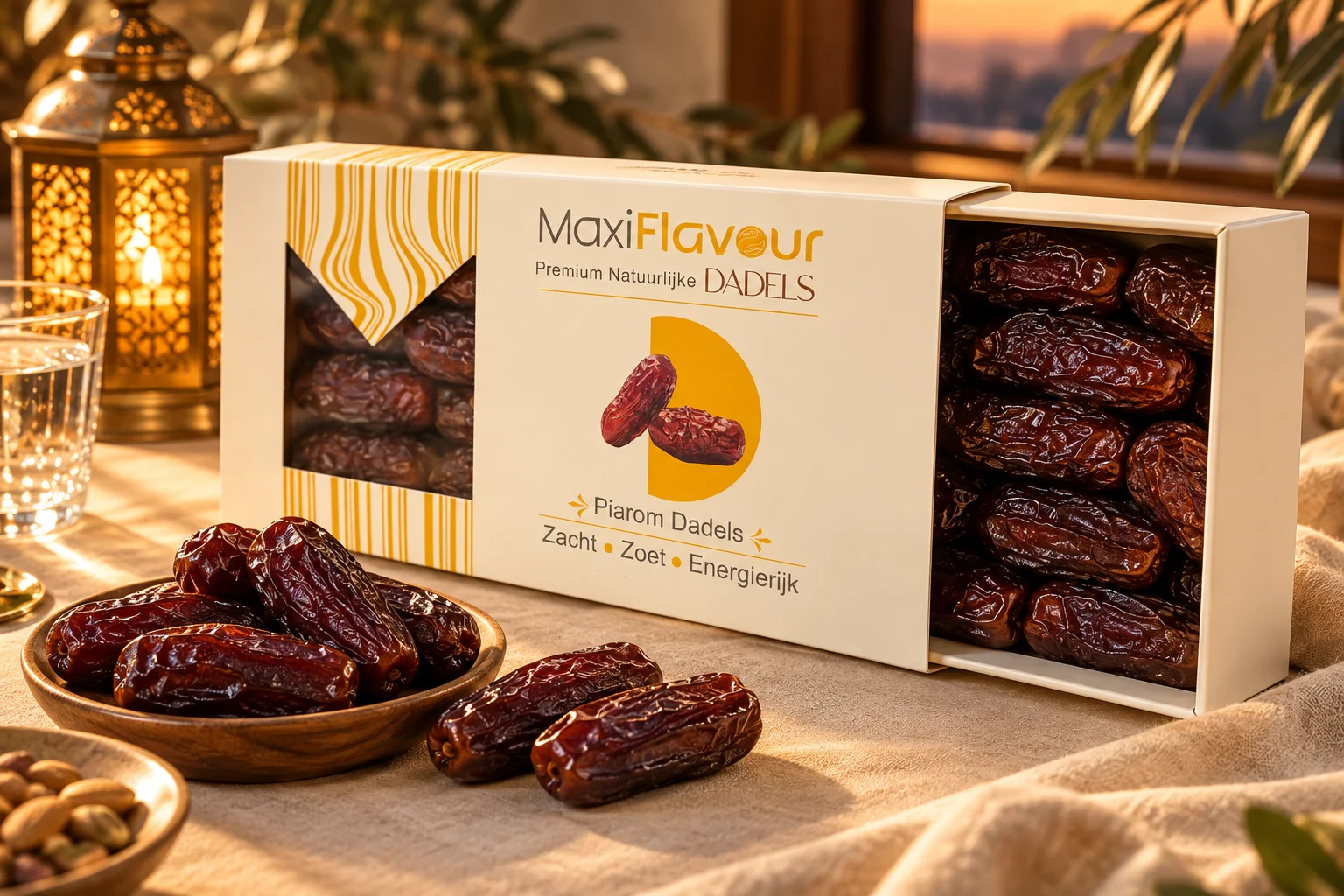
For gifts during Ramadan and Eid, Piarom is the safest choice. It needs no refrigeration, keeps its shape in transit and looks elegant in a box. Its long, slender fruit and dark, thin skin also mark it as a premium date. That matters when you visit family or bring something to a shared iftar.
Mazafati makes a generous gift too, but only if the recipient can refrigerate it on arrival.
Which dates are best for Ramadan cooking and baking?
Many Ramadan tables include sweets made with dates, such as ma’amoul, date cakes, date and tahini spreads and energy balls for the evening. For these, texture matters more than looks.
- Kabkab: soft, moist and honey-sweet. It blends smoothly into date paste or syrup without soaking.
- Sayer: firmer and more concentrated. It suits fillings that need to hold their shape.
- Mazafati: works in smoothies and milkshakes for suhoor. Blend it straight from the fridge.
Ramadan dates at a glance
| Date | Texture | Sweetness | Storage | Best for |
|---|---|---|---|---|
| Mazafati | Soft, juicy | Rich, caramel-cocoa | Fridge | Iftar |
| Piarom | Semi-dry, chewy | Toffee, less sugary feel | Room temperature | Suhoor, gifts |
| Sayer | Semi-dry, dense | Deep caramel | Room temperature | Suhoor, baking |
| Kabkab | Soft, moist | Honey-like, intense | Fridge | Date paste, desserts |
| Zahedi | Firm, semi-dry | Mild, nutty | Room temperature | Light snacking |
How many dates do you need for Ramadan?
A common habit is to break the fast with three dates. Over thirty days that comes to about ninety dates per person for iftar alone. Medium Iranian dates weigh around 8 to 12 grams each, so ninety dates is roughly 0.8 to 1.1 kg per person for the month. Add more if you also eat dates at suhoor, bake with them or host guests.
A practical plan for a household of four:
- Mazafati for iftar: 3–4 kg, stored in the fridge and taken out a day’s portion at a time.
- Piarom or Sayer for suhoor: 1–2 kg in a sealed jar on the counter.
- Kabkab for cooking: 1 kg if you make date paste or sweets.
How should you store dates during Ramadan?
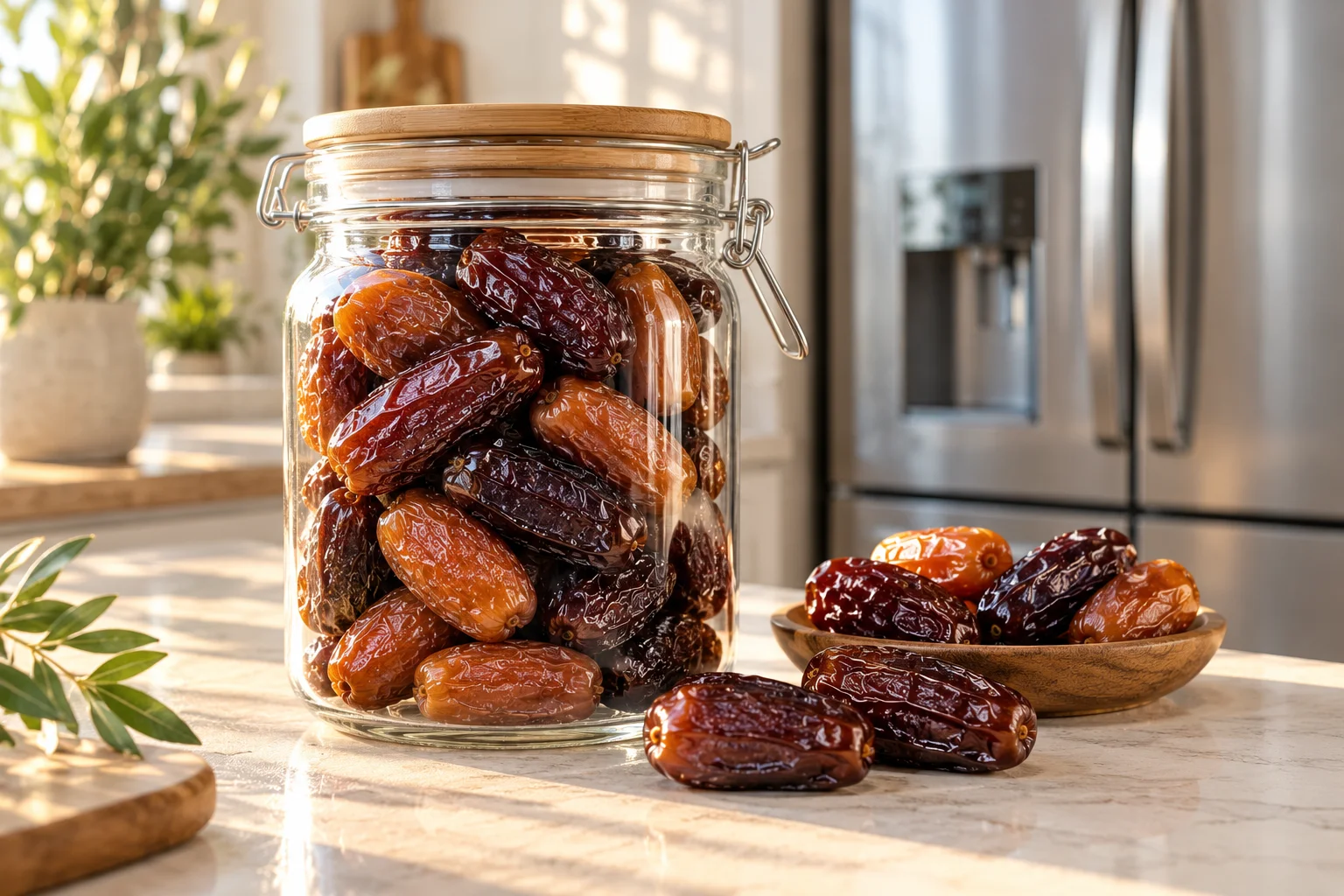
- Soft dates (Mazafati, Kabkab): keep them refrigerated in a sealed container. They stay at their best for several months and can be frozen for longer. Take out only what you need each evening.
- Semi-dry dates (Piarom, Sayer, Zahedi): keep them in an airtight jar away from heat and sunlight. The fridge extends their life further.
- White sugar spots on the skin are natural sugars that have crystallised, not mould. Gently warming the date dissolves them again.
Frequently asked questions
What is the best date to break the fast?
A soft, fresh date such as Mazafati is the easiest to eat at iftar, because it needs little chewing and tastes rich and sweet. Semi-dry dates work too, but take longer to eat.
Are Iranian dates good for Ramadan?
Yes. Iran is one of the world’s largest date producers. Varieties such as Mazafati, Piarom and Sayer are traditional Ramadan dates across Iran and the Gulf region.
Should I buy dates before Ramadan starts?
It is wise to order a week or two ahead. Demand across Europe rises sharply in the weeks before Ramadan, and semi-dry dates keep well if you buy early.
Choosing your Ramadan dates
If you only buy one variety, choose Mazafati for iftar. If you want a date that keeps on the counter and makes a good gift, add Piarom. For suhoor and baking, Sayer and Kabkab cover the rest of the month.
All five varieties are available in our dates collection, sourced directly from growers in Iran and delivered across Europe. Start with fresh Mazafati dates for iftar or Piarom dates for gifting. Every product page lists origin, texture and nutrition per 100 g. You can also buy dates online in one order for the whole month.

Written by
mohamad snaashari
Part of the MaxiFlavour team, sharing recipes, origin stories and good food moments from across Europe.